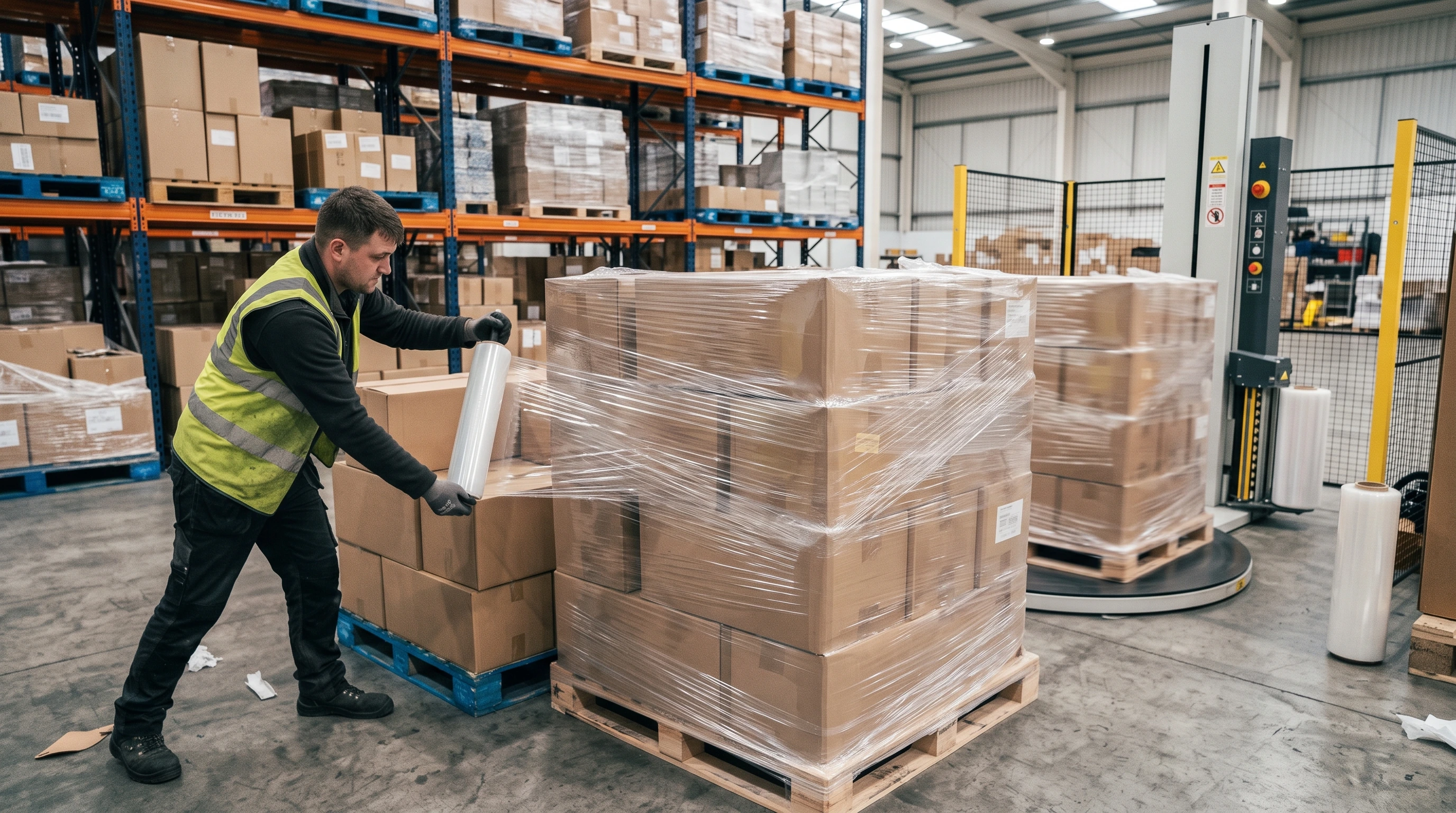
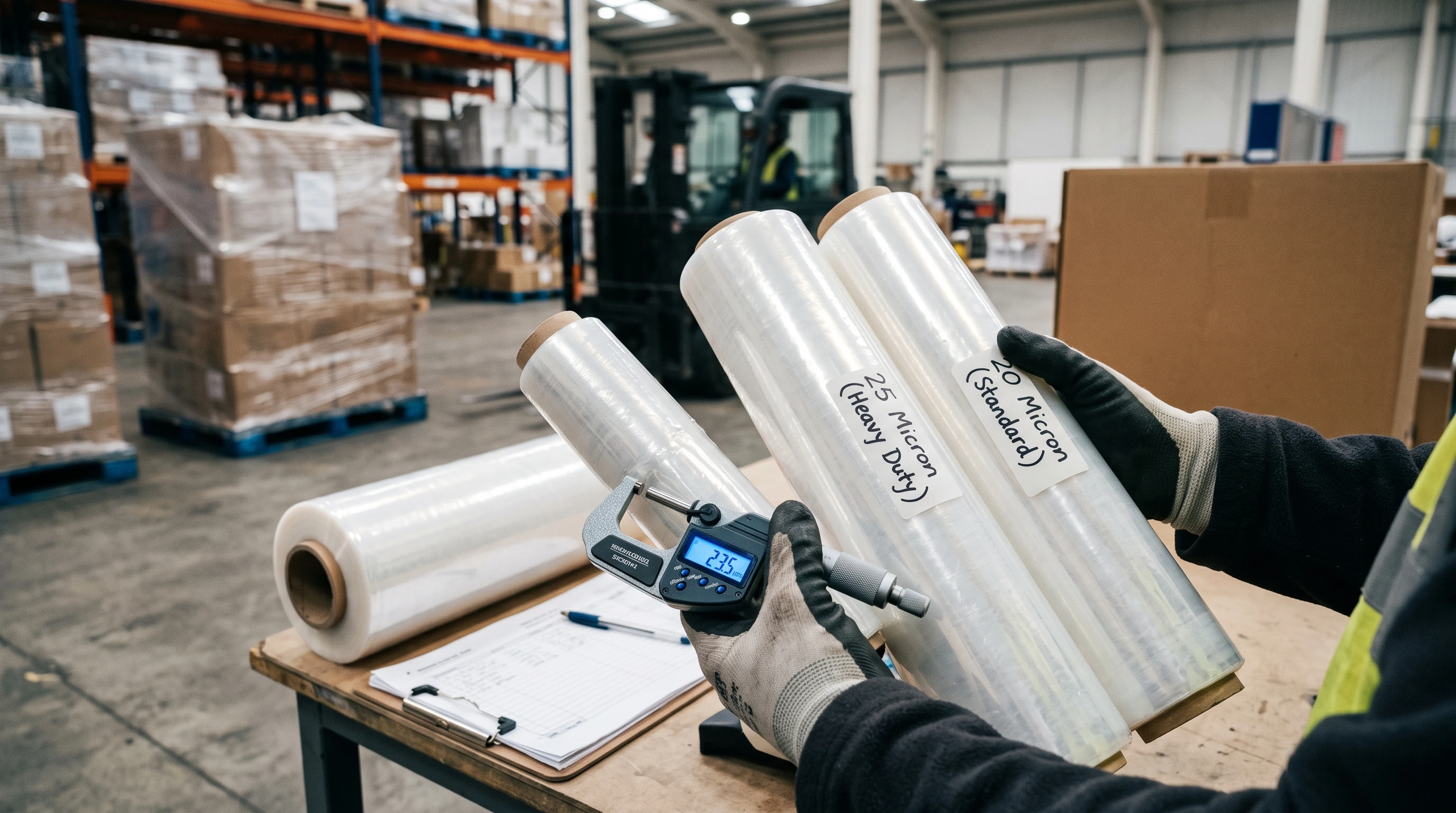
Good pallet wrapping starts at the base and builds upward. Anchor the film securely, keep steady tension, overlap each pass by about 50%, reinforce the base, and finish with a secure tail so the load stays together during handling and transport.
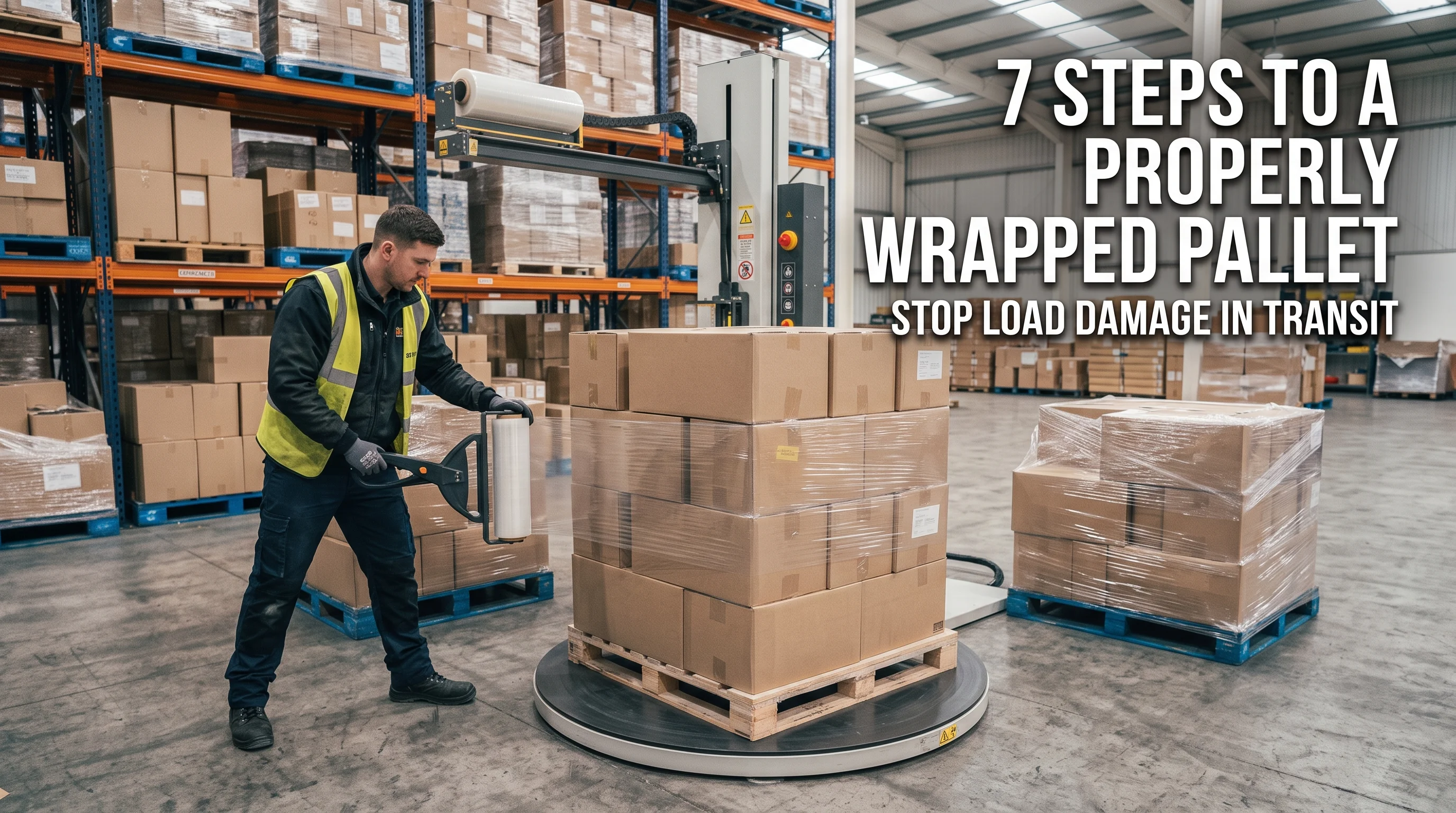
1. Anchor the Film to the Pallet
Start by securing the stretch film around the pallet rather than simply wrapping the cartons. Attach the film low on the pallet and make the first few turns tight enough to create a stable foundation for the rest of the wrap.
2. Wrap the Base 3–5 Times
Once the film is anchored, reinforce the base with around 3–5 turns before moving upward. This creates a firm connection between the load and the pallet and helps prevent the cartons from moving independently during handling.
3. Work Upward With 50% Overlap
With the base secured, gradually work your way up the pallet. Overlap each pass by roughly 50%, keeping the film evenly positioned over the previous layer. This helps maintain consistent coverage and reduces gaps where cartons could shift.
4. Maintain Consistent Tension
As you move upward, keep the film under steady tension rather than continually pulling it tighter. Too little tension can leave the load loose, while excessive tension can break the film or put unnecessary pressure on cartons and packaging.

5. Cover the Top or Add a Top Sheet
Once you reach the top of the load, continue wrapping across the upper section to help hold the cartons together. If the load needs additional protection from dust, moisture or exposure during transport, place a suitable top sheet over the load before continuing the wrap.
6. Wrap Back Down
After covering the top, work your way back down the pallet. This brings the upper layers into the rest of the wrap and helps tie the load together, particularly when dealing with taller pallets.
7. Secure the Tail
Once the pallet is fully wrapped, secure the end of the film so it doesn't unravel during handling or transport. Press the tail firmly against the wrapped film or use the appropriate finishing method for the film and application.
A Proper Wrap Starts With the Right Technique
A pallet can look fully wrapped and still be vulnerable to movement during handling or transport. You should pay attention to the basics, like anchoring the film properly, reinforcing the base, maintaining consistent overlap, and keeping steady tension can make a significant difference in how well the load holds together once it leaves the warehouse.
5 Common Pallet Wrapping Mistakes
A few simple mistakes can affect how securely your pallet stays wrapped during handling and transport. Keep these common problems in mind:
1. No proper anchor: If the film isn't secured to the pallet, the load can move inside the wrap.
2. Too little overlap: Large gaps between film passes can leave parts of your load poorly contained.
3. Wrapping too fast: Moving too quickly can result in uneven tension and inconsistent coverage across the pallet.
4. Skipping the base: Without enough reinforcement around the bottom, the load may not stay securely connected to the pallet.
5. Ignoring an unstable load: Stretch film can't fix a poorly stacked or inherently unstable pallet. Make sure the load is properly arranged before wrapping it.
What About Unstable or Overhanging Loads?
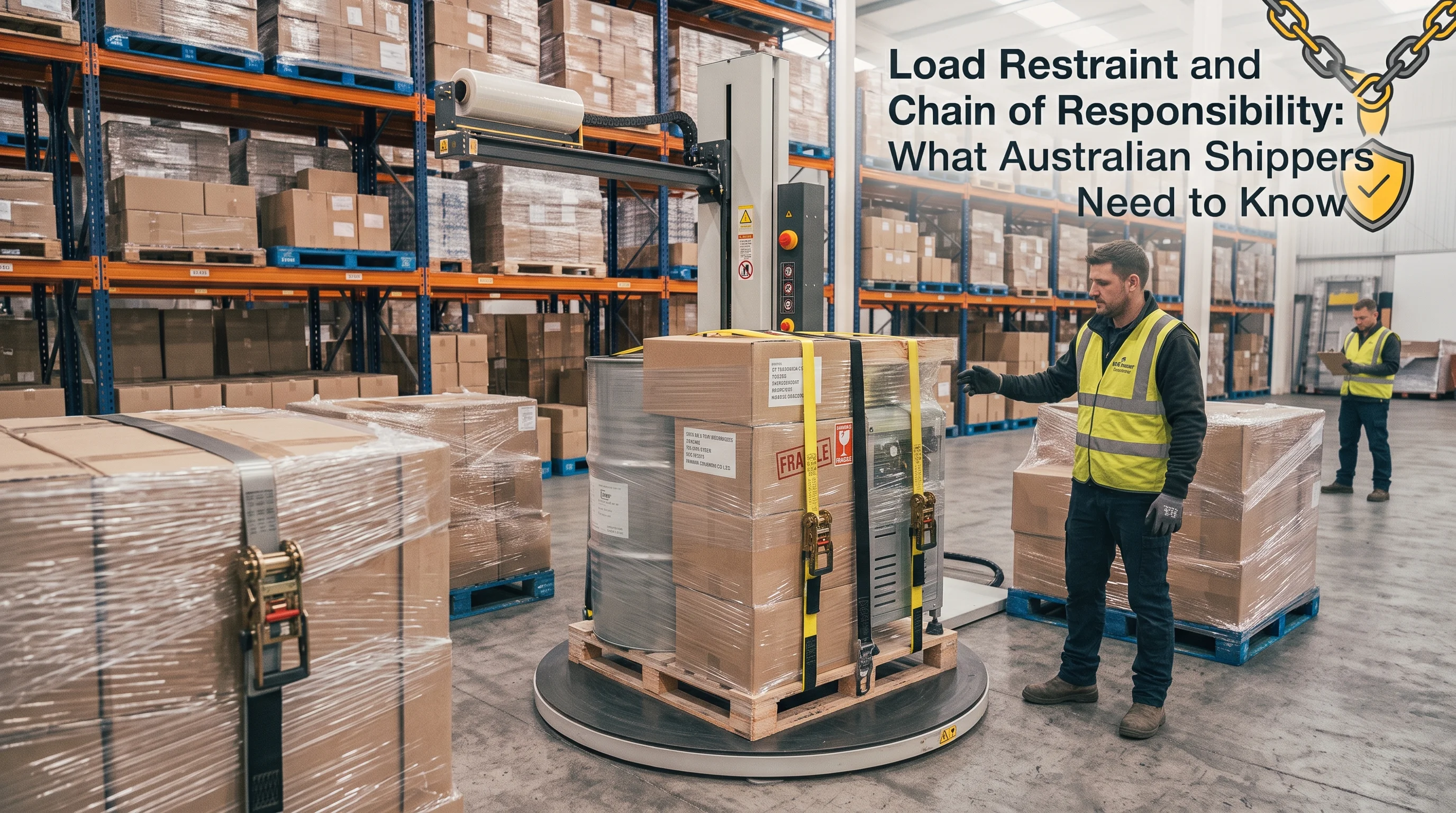
Take extra care with pallets that are uneven, top-heavy or extend beyond the pallet footprint. Wrapping can help unitise the products, but it shouldn't be treated as a substitute for a suitable load-restraint system.
For heavy-vehicle transport, the NHVR says loads must be positioned so the vehicle remains safe and stable, the load is unlikely to fall or become dislodged, and an appropriate restraint system is used. The NHVR's Load Restraint Guide 2025 provides best-practice guidance for different load and vehicle situations.
This is particularly relevant to chain of responsibility packaging and transport planning. Packing, loading and load restraint can involve multiple parties within the Chain of Responsibility, so the wrapping method should form part of the broader loading process rather than being considered in isolation.
Pallet Wrapping FAQs
How many times should you wrap a pallet?
There isn't one number that works for every pallet. A practical starting point is 3–5 wraps around the base, followed by even coverage up the load and back down. The final amount should depend on the load, film, wrapping method and transport conditions.
Which direction should you wrap a pallet?
Start around the base and work upward while maintaining consistent overlap and tension. Once you reach the top, work back down to tie the load together. The exact wrapping pattern can be adjusted for the size and shape of the pallet.
Does pallet wrapping count as load restraint?
Not necessarily on its own. Stretch film can help unitise and stabilise palletised goods, but whether a load meets NHVR load restraint requirements depends on the complete restraint system, the load, the vehicle and the applicable requirements. The NHVR notes that there is no single restraint method for every load.
For specific transport requirements, refer to the applicable load restraint requirements in Australia and the NHVR guidance for your freight task.
What is the recommended method for wrapping a pallet?
Start by anchoring the stretch film securely around the pallet base, then make several turns around the bottom before gradually working upward. Keep consistent tension and roughly 50% overlap between passes, cover the upper section of the load, then wrap back down and secure the film tail.
How many wraps should you make at the base, and why does anchoring the load matter?
A practical starting point is 3–5 wraps around the base, depending on the load and film being used. Anchoring the film to the pallet helps connect the load to the pallet rather than simply wrapping the cartons together, reducing the chance of the load moving independently during handling.
What is the correct overlap percentage between passes?
Around 50% overlap is a practical guideline for consistent coverage. Too little overlap can leave gaps and weak areas in the wrap, while excessive overlap can use more film than necessary without necessarily providing a proportional benefit. The exact overlap may vary depending on the load and film.
Should the top of the load be covered, and when is a top sheet needed?
The upper section should be wrapped sufficiently to help contain the load. A top sheet can be useful when additional protection from dust, moisture or exposure is required. The need depends on the product, packaging, storage conditions and transport environment.
What are the most common wrapping mistakes?
Typical problems include failing to anchor the film properly, using too little overlap, inconsistent tension, not reinforcing the pallet base and wrapping an unstable load without correcting the stacking first.
How should you wrap an unstable or overhanging load safely?
Stretch film should not be relied on to correct an inherently unstable load. Before wrapping, make sure the products are stacked securely and that the load is suitable for the pallet. Overhanging or unusually shaped loads may require additional packaging or a suitable load restraint system depending on how and where they will be transported.
What is the correct way to hold and tension a hand wrapper without causing injury?
Keep the wrapper in a comfortable position and avoid excessive twisting, reaching or pulling while walking around the pallet. Maintain controlled tension rather than trying to stretch the film as hard as possible.