Choosing the right stretch film plays an important role in keeping pallets secure and avoiding excess material use. If you choose too thin, this can lead to film breaks or shifting loads, while using a thicker film than necessary can increase your cost per pallet.
For many Australian warehouses, 20–25 micron stretch film is a practical range for general loads. However, the ideal thickness depends on the weight and shape of the pallet, how stable the load is, whether it has sharp or exposed edges, and how much handling and transport it will go through.
Choosing the Right Stretch Film Thickness for General Loads
Most general palletised goods can be wrapped effectively with 20–25 micron film. This range is suitable for many cartons, packaged products and other reasonably stable warehouse loads.
The weight of the pallet isn't the only factor, though. A heavy pallet made up of smooth, evenly packed cartons may be easier to wrap than a lighter load with sharp corners, uneven surfaces or products extending beyond the pallet.
The wrapping process matters too. The amount of stretch applied, the number of wraps and the way the film is anchored to the pallet can all affect load containment.
Before choosing a thickness, you should consider:
- The overall weight of the load
- The shape and size of the products
- Sharp or exposed edges
- Whether products extend beyond the pallet
- How stable the load is before wrapping
- How far and how often the pallet will be transported
- Whether wrapping is done by hand or machine
- How much stretch and tension are being applied
The objective is straightforward: use enough film to keep the load secure without consuming unnecessary material.
What Does Micron Actually Mean?
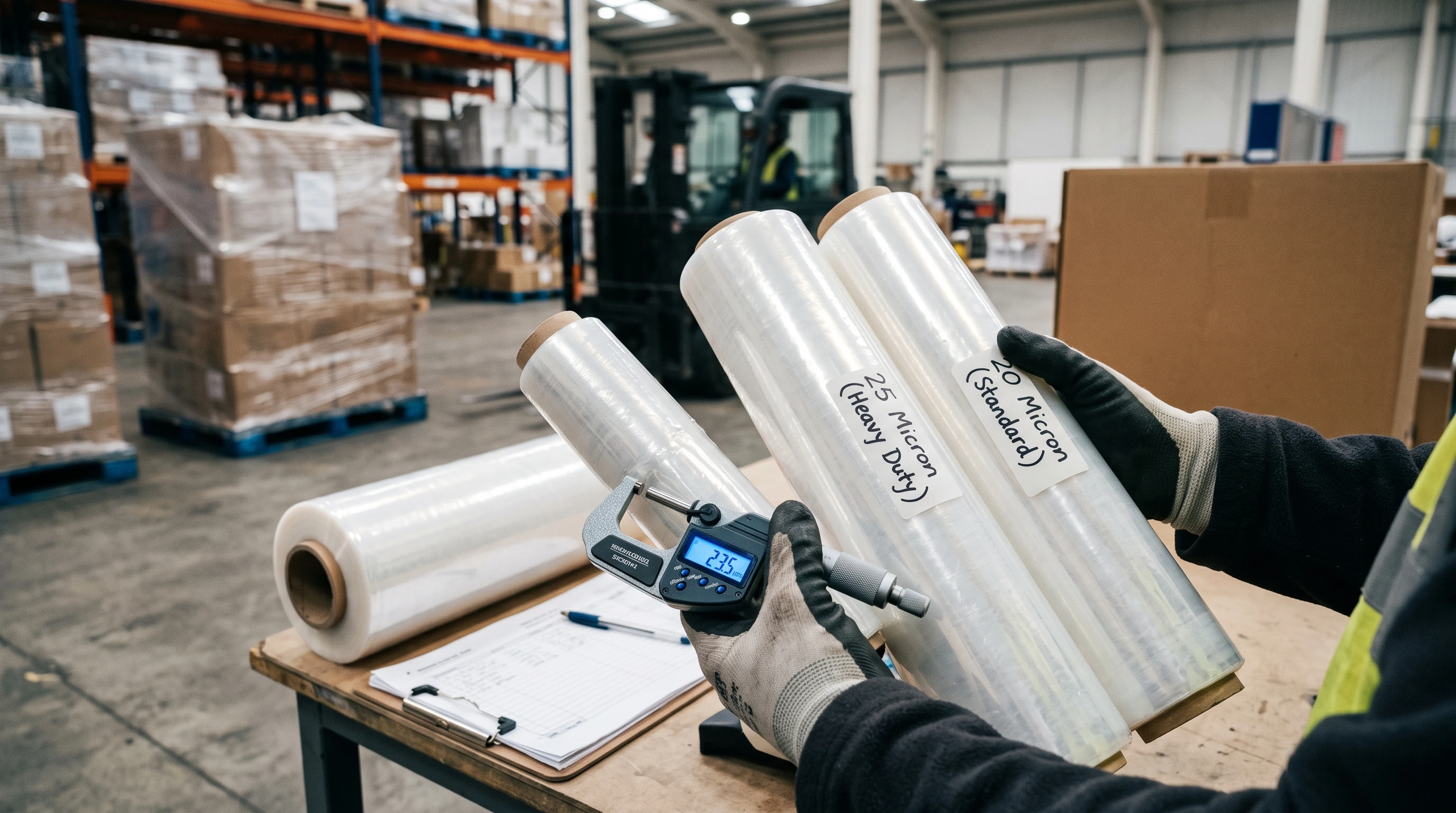
Micron is a measurement of film thickness. A higher micron means a thicker film, so 25 micron film is thicker than 20 micron film, but thickness alone doesn't determine performance because film formulation, stretch characteristics, puncture resistance, and application method also matter.
Recommended Stretch Film Thickness by Load Type
This pallet wrap thickness guide provides a practical starting point based on the type of load being secured.
| Load type | Recommended micron |
|---|---|
| Light cartons | 15–20 micron |
| General palletised goods | 20–25 micron |
| Heavy or sharp-edged loads | 25–30 micron |
| Unstable or overhanging loads | 25–30 micron |
| Export or long-transit loads | 25–30 micron |
These ranges should be treated as a starting point rather than a universal specification. The right film can vary depending on the pallet configuration, wrapping equipment, film formulation and application technique.
For example, a neatly stacked pallet of standard cartons may be adequately contained with 20 micron film, while a load with sharp corners or an irregular shape may need a thicker or more puncture-resistant option.
Transport conditions are another consideration. Pallets that are going through repeated loading, unloading and handling may need more reliable containment than goods being moved a short distance within the same facility.
If you're comparing stretch film gauge in Australia, you'll also see film thickness described using gauge. Micron is commonly used for specifying modern stretch film, but the actual performance of a film depends on more than its thickness.
Cast vs Blown Stretch Film: What's the Difference?
Cast stretch film is manufactured using a cast extrusion process and is known for consistent thickness, good clarity and smooth, relatively quiet unwinding. SecureWrap stocks cast stretch film for pallet wrapping applications where these characteristics are useful.
Blown stretch film is manufactured by blowing the film into a bubble before it is cooled and wound, giving it good puncture and tear resistance. This can make blown film useful for loads with rough surfaces, sharp edges or other demanding wrapping conditions.
The choice between cast and blown film isn't simply about which one is stronger. Consider the type of loads being wrapped, the required containment and how the film performs with your particular wrapping process.
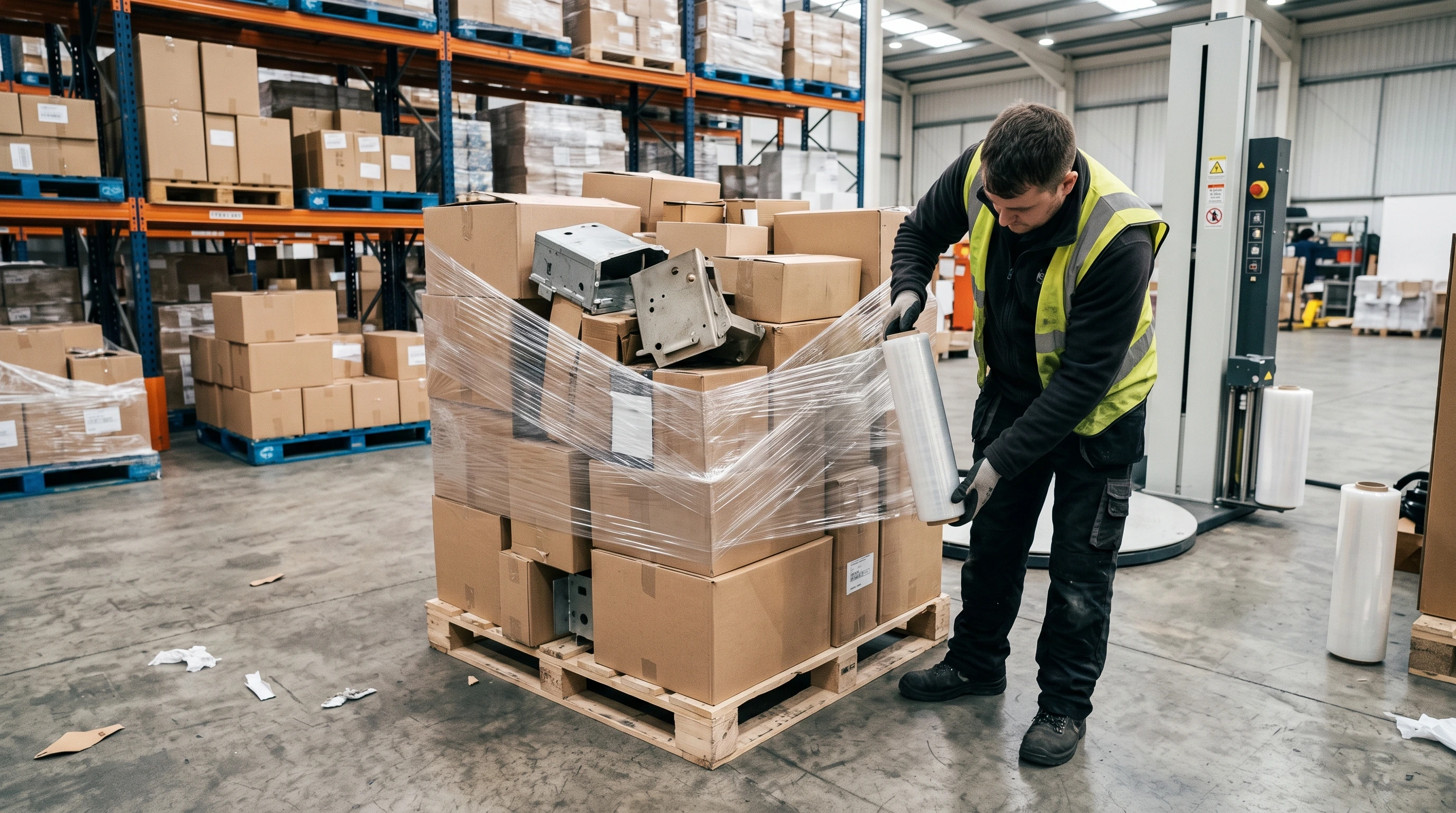
Why Thicker Stretch Film Isn't Always Cheaper
It can be tempting to assume that thicker film automatically offers better value because it provides more material and can feel stronger. In practice, the more useful figure for a warehouse is cost per pallet, not cost per roll.
A lower-priced roll of thinner film may require more wraps to achieve the containment you need. At the same time, moving to a thicker film across every pallet can increase material costs when your regular loads don't actually require it.
For this reason, compare how much film is being consumed on each pallet rather than looking only at the purchase price of the roll.
Tracking film usage can also reveal opportunities to reduce waste. If two film options provide similar load stability but one uses less material per pallet, that difference can add up across hundreds or thousands of pallets.
3 Signs You May Have Chosen the Wrong Stretch Film
1. The Film Keeps Breaking
Repeated film breaks during wrapping can be a sign that the film isn't suited to the load or the way it is being applied.
Sharp corners, rough surfaces, heavy loads and excessive tension can all place additional stress on the film. Before automatically moving to a thicker film, check the wrapping tension, equipment settings and application technique as well.
2. Loads Are Shifting
If cartons or products move after the pallet has been wrapped, the film may not be providing enough containment for that particular load.
However, don't look at film thickness alone. Check whether the products were stacked securely, whether the pallet is overloaded and whether the wrapping pattern is providing enough support around the load.
3. You're Using Too Many Wraps
If operators have to apply layer after layer before they feel confident that the pallet is secure, your current film may not be performing efficiently.
Using excessive amounts of film increases material consumption and can add unnecessary wrapping time. Reviewing the film specification, tension, and wrapping pattern may help achieve the required containment with less material.
Stretch Film Thickness FAQs
What micron stretch wrap is best for general loads?
For many general palletised goods, 20–25 micron stretch film is a practical starting point. The exact requirement depends on the load's weight, shape, stability and handling conditions.
What is the difference between 20 micron and 25 micron stretch film?
The main difference is that 25 micron film is thicker than 20 micron film and may provide additional resistance for heavier, sharper or more demanding loads. For lighter and more stable loads, 20 micron film may provide sufficient containment.
Is thicker stretch film always better?
No. A thicker film can provide additional strength, but using more material than necessary can increase the cost of wrapping each pallet. The aim is to choose a film that provides the required containment without unnecessary material use.
How do I choose the right pallet wrap thickness?
Start with the weight, shape, stability and handling conditions of the pallet. As a general guide, 20–25 micron works for many everyday loads, while heavy, sharp-edged, unstable or long-transit loads may require a different specification.
It's also worth considering whether the film is being applied by hand or machine, how much tension is being used and how many wraps are normally required.
If you're unsure which film is suitable for your warehouse, explore the Stretch Films category to compare available options and find a specification that matches your typical loads.
What micron thicknesses does SecureWrap stock?
SecureWrap's stretch film range covers different thicknesses for different load requirements, with 15, 20, 25 and 30 micron as key thickness points. Check the product pages for current specifications, including width, roll length, core size and film type.
Which loads are recommended for each micron?
15 micron is generally suited to lighter, stable cartons. 20 micron works well for light to general palletised goods, while 25 micron is better suited to heavier or more demanding loads. 30 micron can be considered for heavy, sharp-edged, unstable or overhanging loads and applications involving longer transport. Final recommendations should be based on the actual load and wrapping method.
What is the difference between cast and blown stretch film?
Cast stretch film is generally clearer, quieter to unwind and provides consistent stretch. Blown stretch film is generally stronger against punctures and tears, making it useful for loads with sharp edges or more demanding handling conditions.
What does pre-stretched film mean?
Pre-stretched film has already been stretched during manufacturing, so it requires less force to apply. It can also help reduce film consumption in some applications. The required micron should not be selected based on thickness alone; the film's performance, load type and application method all need to be considered.
What is the most common mistake customers make when choosing film thickness?
A common mistake is assuming that a thicker film is always better. Thicker film can provide additional strength, but it may also mean using more material than necessary. The better approach is to match the film to the load and measure how much film is actually being used per pallet.
How does film thickness affect the cost per pallet?
The price of a roll doesn't tell you what the film actually costs to use. A thinner film may have a lower price per roll but require more wraps, while a higher-performing film may use less material per pallet. Comparing film cost and actual consumption per pallet gives a more useful picture of the overall cost.
What load characteristics might require a heavier film?
Sharp edges, unstable stacking, overhanging products, heavier loads and longer transport can all increase the demands placed on the film. Export shipments and certain storage conditions may also require a different film specification. The right choice depends on the specific load and application.
What should you know before choosing a stretch film?
Consider what is being wrapped, pallet weight and size, load stability, sharp edges or overhangs, wrapping method, pallets wrapped per day, current film and number of wraps used. It is also useful to know whether the pallets will be stored in cold conditions, transported long distances or exported. These details help match the film to the actual application rather than choosing a micron based on price alone.