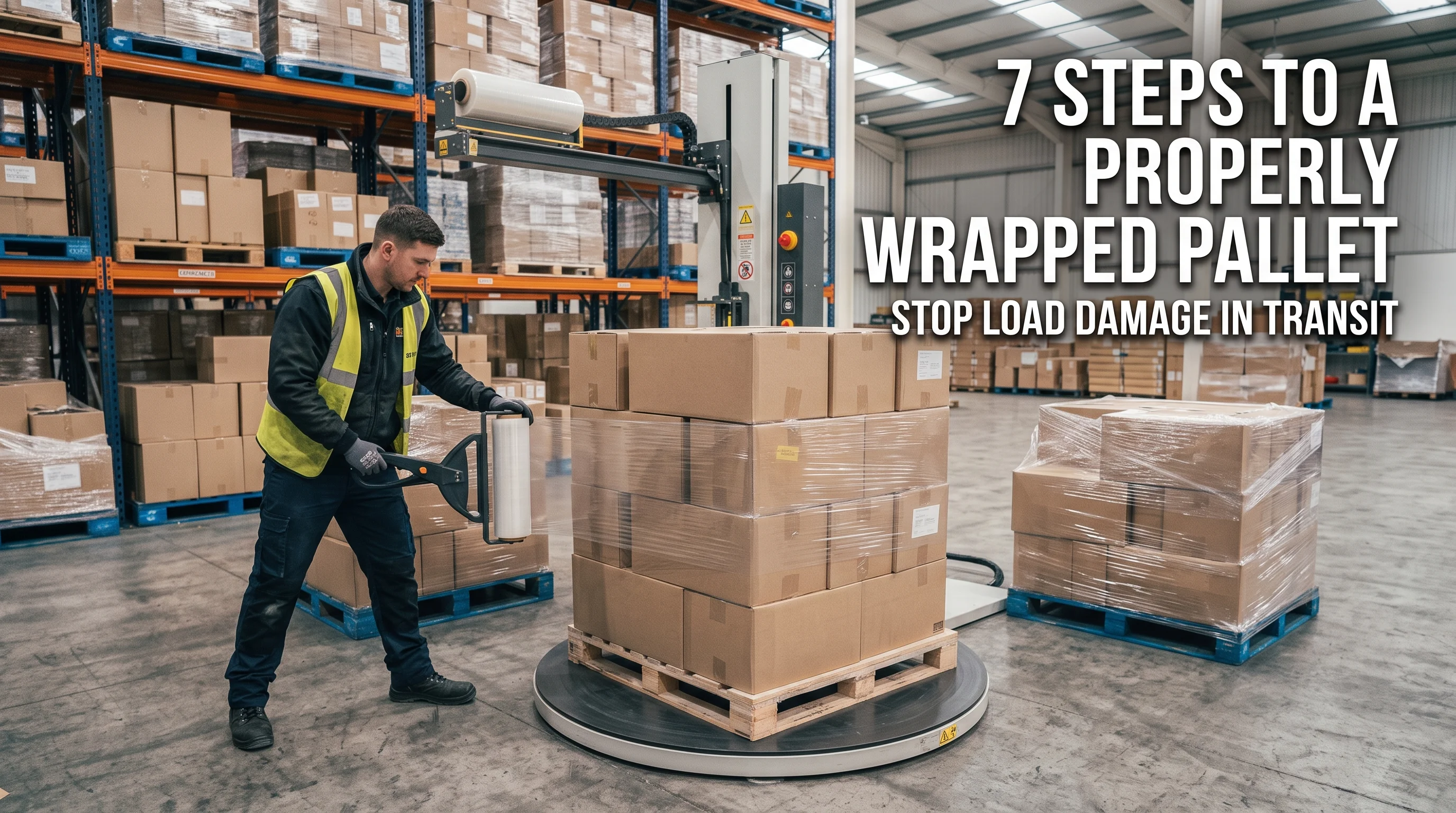
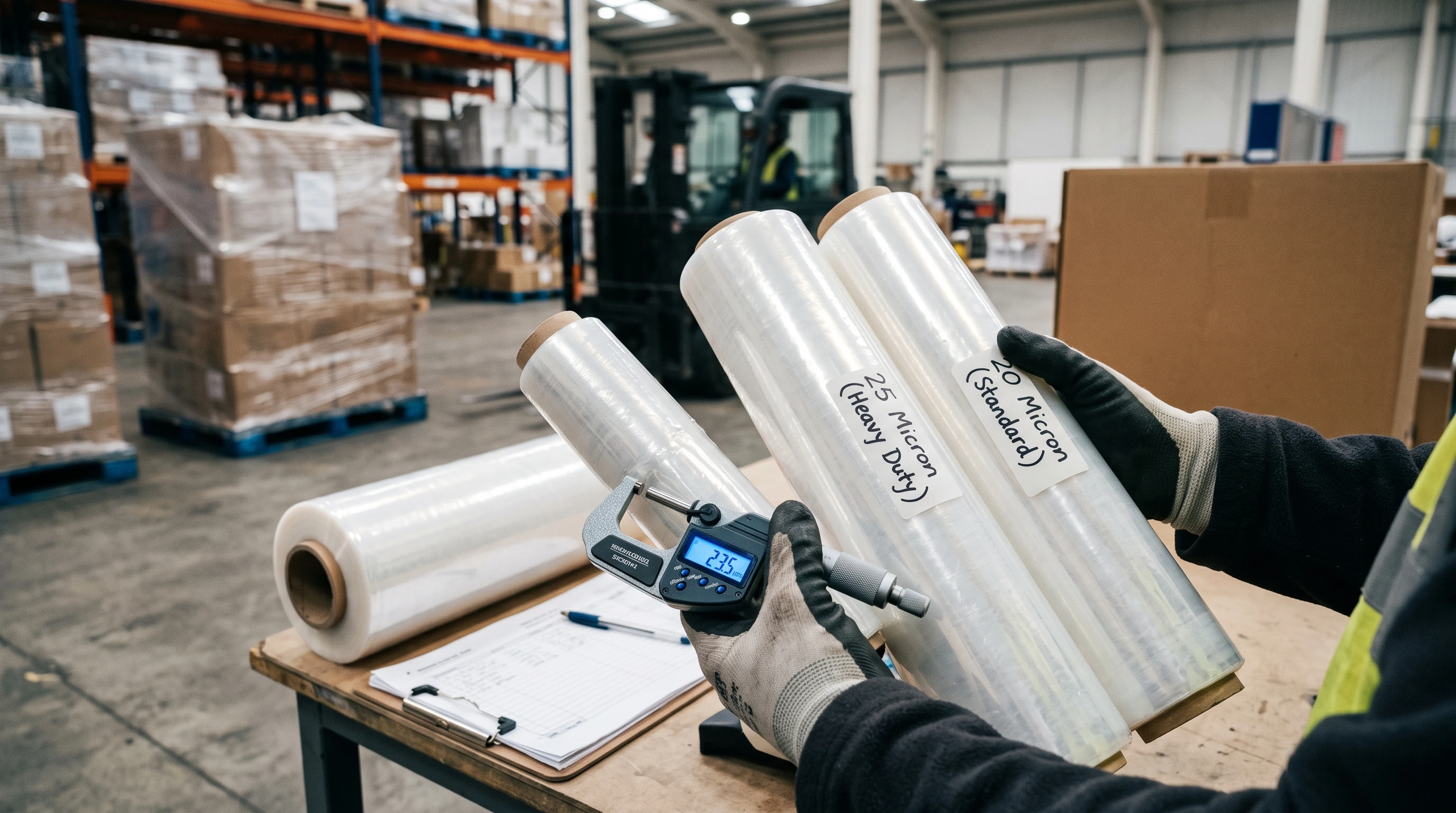
When a pallet leaves your warehouse, the driver isn't the only person responsible for how that load has been prepared. The way goods are packed, wrapped, positioned and loaded can involve several people across the supply chain.
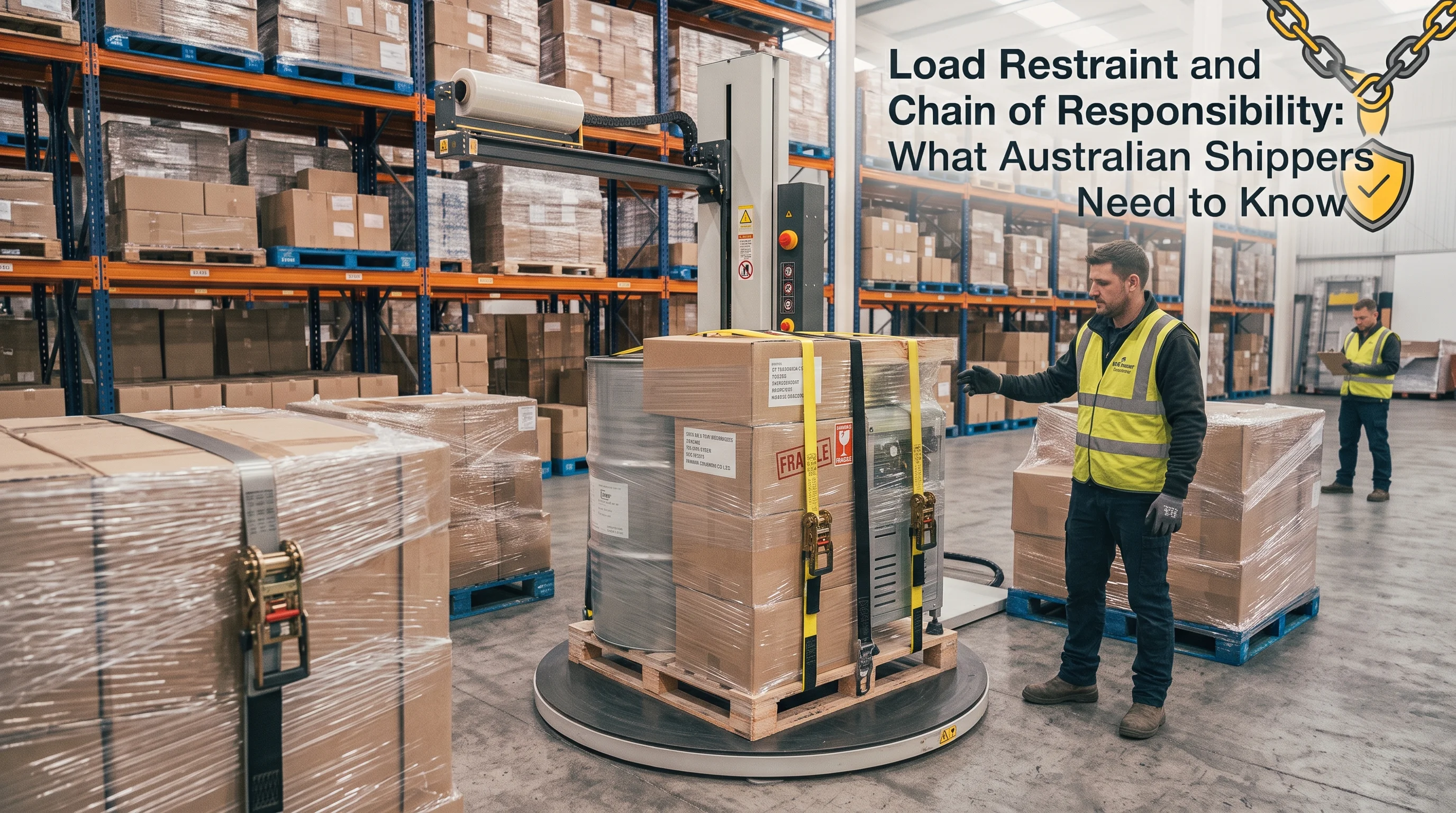
Under Australia's Chain of Responsibility (CoR) laws, consignors, packers, loaders and other parties can have safety duties based on the role they perform and the control they have over the transport task. So, if your team is preparing freight for a heavy vehicle, load restraint isn't something that starts and ends with the driver checking the truck.
Chain of Responsibility: What Does It Actually Mean?
Chain of Responsibility is essential because the responsibility for transport safety sits across the supply chain.
Consider a typical dispatch. One person may pack the cartons, another may prepare the pallet, someone else may load it onto the truck, while a transport operator handles the journey. Each person has a different role, but decisions made earlier in the process can affect what happens on the road.
That's why CoR duties aren't limited to the person behind the wheel. The NHVR identifies a range of parties that can have responsibilities, including consignors, consignees, packers, loading managers and loaders.
What Does a Properly Restrained Load Need to Withstand?
Once the vehicle is moving, the load is exposed to forces from braking, acceleration and cornering. Your restraint system needs to be suitable for those forces, rather than simply holding the load in place while the vehicle is stationary.
The NHVR's performance standards specify minimum restraint forces in different directions:
| Direction | Minimum force |
|---|---|
| Forward | 0.8g |
| Sideways | 0.5g |
| Rearward | 0.5g |
| Upward | 0.2g |
In practical terms, a restraint system needs to keep the load from moving forward, sideways, rearward or upward under the relevant forces. The exact restraint arrangement will depend on the load, vehicle, packaging, friction and other factors. The NHVR Load Restraint Guide 2025 provides the detailed guidance and examples for different situations.
Stretch Wrap Doesn't Automatically Replace Load Restraint
This is where pallet packaging and vehicle load restraint can easily get mixed up.
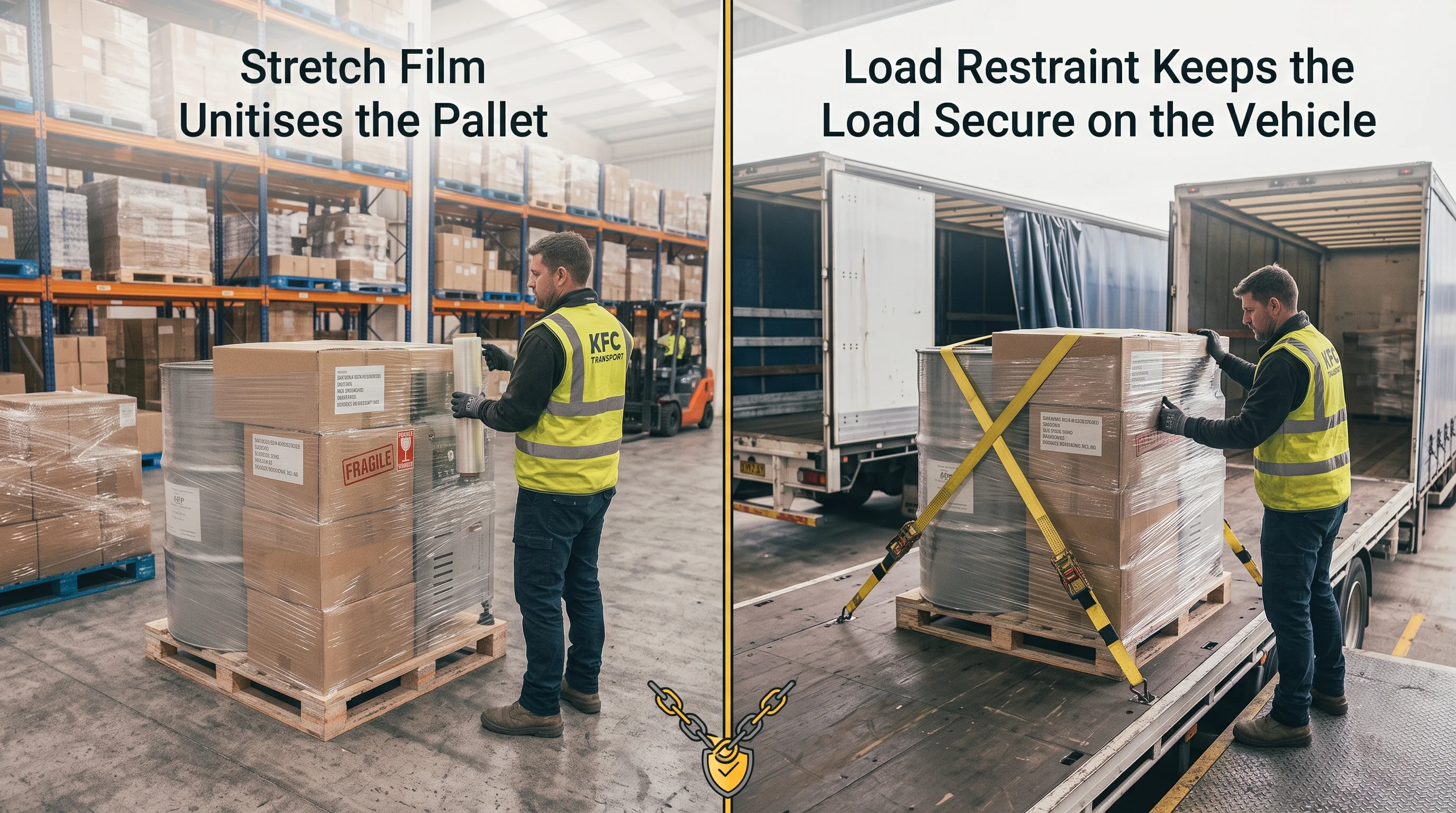
When you're wrapping a pallet with stretch film, the main purpose is to unitise the products — holding cartons or other individual items together as a more stable load. This helps reduce movement between products and keeps the pallet together during handling and transport. The NHVR recognises stretch wrapping as a method for unitising loads on pallets.
But once that pallet is loaded onto a vehicle, there's another question to consider: how will the load be kept from moving during the journey?
That's where the load restraint system comes in.
Depending on the load and vehicle, this may involve tie-down lashings, blocking, friction, vehicle structures or a combination of methods. Stretch wrap can also form part of a load restraint system in some circumstances, but its performance needs to be sufficient for the forces involved. If the capacity of the wrapping material isn't known, the NHVR advises against relying on it when calculating the restraint system.
So, adding more layers of film isn't automatically a substitute for proper load restraint. Stretch film helps keep the products together as a unit, while the overall restraint arrangement needs to be suitable for securing that load during transport.
Put simply, stretch film helps unitise the pallet; load restraint keeps the load secure on the vehicle. In some applications, the stretch film can contribute to the restraint system, but that depends on its verified performance and how the complete system is designed.
What Should Your Dispatch Team Record?
Compliance isn't just about having the right equipment available. Your team should also be able to show how loads are prepared and checked before they leave the site.
The exact records will depend on your operation, but a useful dispatch process can include:
- Load details: Record the weight, dimensions and type of goods being transported.
- Pallet and packaging checks: Check for damaged pallets, unstable stacking or packaging that could affect load stability.
- Loading method: Record how the goods are positioned and loaded onto the vehicle.
- Restraint arrangement: Note the restraint method being used for the particular load.
- Pre-dispatch checks: Confirm that the load is stable, properly positioned and unlikely to become dislodged.
- Problems identified: Keep a record of damaged packaging, unstable loads or other issues and what was done to correct them.
- Training and procedures: Maintain current loading, packaging and restraint procedures and evidence that relevant workers have been trained.
For unusual or difficult loads, a standard checklist may not be enough. Where the restraint arrangement requires a specific design or assessment, appropriate technical advice should be obtained.
Load Restraint FAQs
Is stretch wrap enough to secure a pallet for transport?
Not necessarily. Stretch film is primarily used to contain and unitise products on a pallet. The load still needs to be assessed as part of the complete vehicle restraint system and against the applicable requirements for that freight task.
Does Chain of Responsibility apply to warehouse staff?
It can. CoR responsibilities are linked to the functions a person or business performs, not simply their job title. People involved in packing, loading or managing freight can have duties where their actions or decisions affect transport safety.
Where can I find the Load Restraint Guide Australia?
The NHVR Load Restraint Guide 2025 is the current guide to use when looking at load restraint practices for heavy vehicles. It covers restraint principles, different load types and practical examples to help determine an appropriate restraint arrangement.
What does Chain of Responsibility mean in plain English, and who is responsible?
Chain of Responsibility (CoR) means that responsibility for heavy-vehicle transport safety can extend beyond the driver. Depending on their role, consignors, packers, loaders, loading managers, operators, employers and other parties can have duties under the Heavy Vehicle National Law. Each party needs to manage the safety risks associated with the transport activities they control or influence.
What does the current NHVR Load Restraint Guide require regarding packaging and restraint?
The NHVR Load Restraint Guide 2025 provides best-practice guidance for designing and assessing load restraint systems. Packaging should help consolidate and protect the load, while the overall restraint system must be capable of withstanding the required transport forces. Stretch or shrink wrapping can form part of a restraint system where its strength and performance are sufficient for the forces involved.
What performance standards must a restrained load meet?
For heavy-vehicle loads, the restraint system must be capable of withstanding 0.8g forward, 0.5g sideways, 0.5g rearward and 0.2g upward when relying on friction in the other directions. These are performance standards rather than requirements for one specific restraint method, so the appropriate solution depends on the load, vehicle and restraint arrangement.
Is stretch wrap ever sufficient restraint on its own?
Stretch wrap should not automatically be treated as sufficient restraint. The NHVR states that stretch and shrink wrapping on its own is not suitable for heavier loads or loads with edges or corners that could tear or penetrate the wrapping. However, wrapping can form part of a load restraint system when its capacity is known and it is sufficiently strong or layered to withstand the required forces.
What are the current penalties for a load restraint or Chain of Responsibility breach?
Penalties depend on the specific offence and its severity. For a Category 1 Primary Duty offence, the current maximum penalty is more than $424,794 for an individual or $4,113,837 for a corporation, with imprisonment of up to five years also possible for an individual. Other loading and restraint offences have different penalties, so a single “load restraint fine” should not be quoted as applying to every breach.
What documentation should a dispatch team keep to demonstrate compliance?
Keep records that show how your team manages loading and restraint risks. Depending on the operation, this can include load details, loading and restraint procedures, inspection or pre-dispatch checks, training records, identified issues and corrective actions. The documentation should support the actual process used at your site rather than being a generic checklist kept only for compliance purposes.